
About This Book
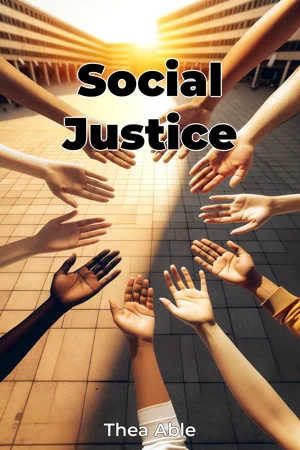
"Is social justice achievable in our lifetime?" This provocative question opens "Social Justice," a comprehensive exploration of the ongoing struggle for equality in our modern world. As societies grapple with persistent racial, gender, and economic disparities, this book offers a timely and in-depth analysis of the complex issues surrounding social justice. The book focuses on three key topics: systemic inequality, intersectionality, and activism in the digital age. These themes are crucial for understanding the multifaceted nature of social justice and its relevance to contemporary readers. By examining how various forms of discrimination intersect and reinforce each other, the book provides a nuanced perspective on the challenges faced by marginalized communities. To contextualize these issues, "Social Justice" delves into the historical roots of inequality, tracing the evolution of social movements from the Civil Rights era to present-day activism. This historical backdrop is essential for readers to grasp the long-standing nature of these struggles and the progress that has been made, as well as the work that remains to be done. The central argument of the book posits that achieving social justice requires a holistic approach that addresses systemic inequalities at their core, rather than treating symptoms in isolation. This thesis is significant as it challenges readers to think beyond surface-level solutions and consider the deep-seated structural changes necessary for true equality. Structurally, the book is divided into four main parts. The first introduces key concepts and theoretical frameworks for understanding social justice. The second examines specific case studies of inequality across various domains, including education, healthcare, and criminal justice. The third part explores the role of intersectionality in shaping individual experiences of discrimination. The final section focuses on modern activism, discussing how social media and grassroots movements are reshaping the landscape of social justice advocacy. To support its arguments, "Social Justice" draws on a wide range of evidence, including academic research, government reports, and first-hand accounts from activists and affected individuals. The book also employs innovative data visualization techniques to illustrate complex social trends, making the information more accessible to a general audience. Interdisciplinary in nature, the book connects social justice issues to fields such as psychology, economics, and political science. For instance, it explores how cognitive biases contribute to the perpetuation of stereotypes, how economic policies can exacerbate or alleviate inequality, and how political systems influence the distribution of power and resources in society. What sets "Social Justice" apart is its emphasis on intersectionality and its exploration of how different forms of oppression interact and compound each other. This nuanced approach provides a more comprehensive understanding of social justice issues than traditional single-issue focused works. The writing style is academic yet accessible, striking a balance between rigorous analysis and engaging narrative. Personal stories and case studies are interwoven with data and theory, creating a compelling read that appeals to both scholars and general readers interested in social issues. While the book is suitable for a wide audience, it is particularly valuable for students, activists, policymakers, and anyone seeking a deeper understanding of social justice issues. It serves as both an introduction to key concepts for newcomers and a comprehensive resource for those already engaged in social justice work. As a work of current events and social science, "Social Justice" adheres to scholarly standards while remaining relevant to contemporary debates. It presents a balanced view of contentious issues, acknowledging different perspectives while maintaining a clear ethical stance on the importance of equality and human rights. The book covers a broad range of social justice issues but focuses primarily on the United States and other Western democracies. This scope allows for in-depth analysis while acknowledging that social justice concerns vary across different global contexts. Readers will find practical applications throughout the book, including strategies for recognizing and combating personal biases, tips for effective activism, and guidelines for creating more inclusive policies in various institutional settings. "Social Justice" also addresses ongoing controversies in the field, such as debates over affirmative action, the role of identity politics, and the tension between free speech and hate speech. By presenting these issues in a nuanced manner, the book encourages readers to think critically about complex social problems. In sum, "Social Justice" offers a comprehensive, thought-provoking examination of one of the most pressing issues of our time. By combining historical context, contemporary analysis, and forward-looking strategies, it equips readers with the knowledge and tools to engage meaningfully in the ongoing struggle for a more just and equitable society.
"Is social justice achievable in our lifetime?" This provocative question opens "Social Justice," a comprehensive exploration of the ongoing struggle for equality in our modern world. As societies grapple with persistent racial, gender, and economic disparities, this book offers a timely and in-depth analysis of the complex issues surrounding social justice. The book focuses on three key topics: systemic inequality, intersectionality, and activism in the digital age. These themes are crucial for understanding the multifaceted nature of social justice and its relevance to contemporary readers. By examining how various forms of discrimination intersect and reinforce each other, the book provides a nuanced perspective on the challenges faced by marginalized communities. To contextualize these issues, "Social Justice" delves into the historical roots of inequality, tracing the evolution of social movements from the Civil Rights era to present-day activism. This historical backdrop is essential for readers to grasp the long-standing nature of these struggles and the progress that has been made, as well as the work that remains to be done. The central argument of the book posits that achieving social justice requires a holistic approach that addresses systemic inequalities at their core, rather than treating symptoms in isolation. This thesis is significant as it challenges readers to think beyond surface-level solutions and consider the deep-seated structural changes necessary for true equality. Structurally, the book is divided into four main parts. The first introduces key concepts and theoretical frameworks for understanding social justice. The second examines specific case studies of inequality across various domains, including education, healthcare, and criminal justice. The third part explores the role of intersectionality in shaping individual experiences of discrimination. The final section focuses on modern activism, discussing how social media and grassroots movements are reshaping the landscape of social justice advocacy. To support its arguments, "Social Justice" draws on a wide range of evidence, including academic research, government reports, and first-hand accounts from activists and affected individuals. The book also employs innovative data visualization techniques to illustrate complex social trends, making the information more accessible to a general audience. Interdisciplinary in nature, the book connects social justice issues to fields such as psychology, economics, and political science. For instance, it explores how cognitive biases contribute to the perpetuation of stereotypes, how economic policies can exacerbate or alleviate inequality, and how political systems influence the distribution of power and resources in society. What sets "Social Justice" apart is its emphasis on intersectionality and its exploration of how different forms of oppression interact and compound each other. This nuanced approach provides a more comprehensive understanding of social justice issues than traditional single-issue focused works. The writing style is academic yet accessible, striking a balance between rigorous analysis and engaging narrative. Personal stories and case studies are interwoven with data and theory, creating a compelling read that appeals to both scholars and general readers interested in social issues. While the book is suitable for a wide audience, it is particularly valuable for students, activists, policymakers, and anyone seeking a deeper understanding of social justice issues. It serves as both an introduction to key concepts for newcomers and a comprehensive resource for those already engaged in social justice work. As a work of current events and social science, "Social Justice" adheres to scholarly standards while remaining relevant to contemporary debates. It presents a balanced view of contentious issues, acknowledging different perspectives while maintaining a clear ethical stance on the importance of equality and human rights. The book covers a broad range of social justice issues but focuses primarily on the United States and other Western democracies. This scope allows for in-depth analysis while acknowledging that social justice concerns vary across different global contexts. Readers will find practical applications throughout the book, including strategies for recognizing and combating personal biases, tips for effective activism, and guidelines for creating more inclusive policies in various institutional settings. "Social Justice" also addresses ongoing controversies in the field, such as debates over affirmative action, the role of identity politics, and the tension between free speech and hate speech. By presenting these issues in a nuanced manner, the book encourages readers to think critically about complex social problems. In sum, "Social Justice" offers a comprehensive, thought-provoking examination of one of the most pressing issues of our time. By combining historical context, contemporary analysis, and forward-looking strategies, it equips readers with the knowledge and tools to engage meaningfully in the ongoing struggle for a more just and equitable society.
"Social Justice" offers a comprehensive exploration of the ongoing struggle for equality in our modern world, focusing on systemic inequality, intersectionality, and digital-age activism. This timely analysis delves into the complex issues surrounding social justice, tracing the evolution of movements from the Civil Rights era to present-day advocacy. The book argues that achieving true equality requires addressing deep-rooted systemic inequalities rather than treating surface-level symptoms. Through a combination of academic research, government reports, and first-hand accounts, the book examines how various forms of discrimination intersect and reinforce each other. It highlights the importance of understanding these intersections to grasp the challenges faced by marginalized communities fully. The book's structure progresses from introducing key concepts to exploring specific case studies, examining intersectionality, and finally discussing modern activism techniques. What sets this work apart is its emphasis on intersectionality and its accessible yet rigorous approach to complex social issues. By interweaving personal stories with data and theory, "Social Justice" provides readers with a nuanced understanding of contemporary debates while offering practical strategies for recognizing biases and creating more inclusive policies. This makes it an invaluable resource for students, activists, policymakers, and anyone seeking to engage meaningfully in the ongoing struggle for a more equitable society.
Book Details
ISBN
9788233932671
Publisher
Publifye AS
Your Licenses
You don't own any licenses for this book
Purchase a license below to unlock this book and download the EPUB.
Purchase License
Select a tier to unlock this book
Need bulk licensing?
Contact us for enterprise agreements.