
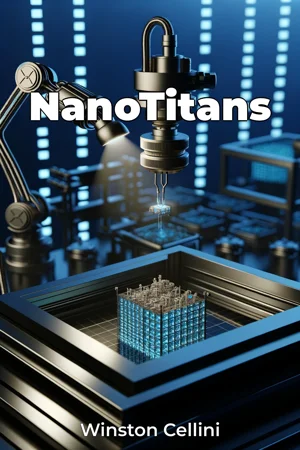
About This Book
"What if we could build skyscrapers from atoms?" This provocative question opens "NanoTitans," a groundbreaking exploration of the convergence between nanotechnology and robotics. The book delves into a future where colossal machines are constructed from microscopic components, challenging our understanding of scale and engineering. At its core, "NanoTitans" investigates three key topics: the principles of nanotechnology, the evolution of robotics, and the revolutionary fusion of these fields. The significance of these topics lies in their potential to reshape industries, from manufacturing and medicine to space exploration and environmental remediation. By understanding how to manipulate matter at the atomic level and combine it with advanced robotics, we stand on the brink of a technological revolution that could solve some of humanity's most pressing challenges. To fully appreciate the concepts presented, readers are provided with a concise history of both nanotechnology and robotics. The book traces the origins of nanotechnology from Richard Feynman's visionary 1959 lecture "There's Plenty of Room at the Bottom" to modern breakthroughs in materials science. Similarly, it outlines the evolution of robotics from early automatons to today's AI-driven machines. This context sets the stage for understanding the monumental leap forward that NanoTitans represent. The central thesis of "NanoTitans" posits that the integration of nanotechnology and robotics will lead to the creation of self-assembling, gigantic machines with unprecedented capabilities and applications. This argument is crucial as it represents a paradigm shift in how we approach large-scale engineering and problem-solving. Structurally, the book begins by introducing the fundamental concepts of nanotechnology and advanced robotics. It then progresses through three major sections: the science behind nano-scale assembly, the engineering challenges of scaling up to titan-sized structures, and the potential applications of NanoTitans across various fields. The narrative culminates in a vision of a world transformed by these technological marvels, exploring both their promise and potential pitfalls. To support its arguments, "NanoTitans" draws on cutting-edge research from leading laboratories and institutions worldwide. The authors present case studies of current nanotech and robotics projects, extrapolating from these to illustrate the potential of NanoTitans. Unique to this book is its use of advanced computer simulations to model the behavior of nano-scale components in macro-scale structures. The interdisciplinary nature of NanoTitans is evident in its connections to fields such as materials science, artificial intelligence, and civil engineering. The book explores how advancements in AI are crucial for coordinating the assembly and operation of NanoTitans, while materials science provides the building blocks for their construction. Civil engineering principles are reimagined at the nano-scale, offering new solutions to age-old structural challenges. What sets "NanoTitans" apart is its bold vision of a future where the boundaries between the microscopic and the monumental are blurred. The authors present a unique perspective that challenges readers to rethink the limits of engineering and imagine possibilities that seem drawn from science fiction. Written in an accessible yet authoritative tone, "NanoTitans" strikes a balance between technical detail and engaging narrative. While rooted in hard science, the book employs analogies and real-world examples to make complex concepts understandable to a broad audience. The target readership includes technology enthusiasts, engineers, futurists, and policymakers. For these audiences, "NanoTitans" offers a glimpse into a possible future and the tools to help shape it. The book is particularly valuable for those interested in the long-term implications of emerging technologies. As a work of technology non-fiction, "NanoTitans" adheres to genre conventions by providing thorough research, expert insights, and a forward-looking perspective. It goes beyond mere explanation to offer critical analysis and thought-provoking scenarios. While the book covers a wide range of applications for NanoTitans, it acknowledges the speculative nature of some projections and the current limitations of nanotechnology. It also addresses ethical considerations and potential risks associated with this technology. Readers will find practical insights into how NanoTitans could revolutionize industries they're familiar with, from construction to healthcare. The book offers a framework for understanding and participating in the nano-revolution, whether as a professional, investor, or informed citizen. "NanoTitans" doesn't shy away from controversies, addressing concerns about nano-pollution, the ethical implications of self-replicating machines, and the potential for weaponization. It presents a balanced view of the debates surrounding these transformative technologies. In sum, "NanoTitans" offers a comprehensive, engaging, and thought-provoking exploration of a future where the very small builds the unimaginably large, inviting readers to envision and prepare for a world of technological wonders.
"What if we could build skyscrapers from atoms?" This provocative question opens "NanoTitans," a groundbreaking exploration of the convergence between nanotechnology and robotics. The book delves into a future where colossal machines are constructed from microscopic components, challenging our understanding of scale and engineering. At its core, "NanoTitans" investigates three key topics: the principles of nanotechnology, the evolution of robotics, and the revolutionary fusion of these fields. The significance of these topics lies in their potential to reshape industries, from manufacturing and medicine to space exploration and environmental remediation. By understanding how to manipulate matter at the atomic level and combine it with advanced robotics, we stand on the brink of a technological revolution that could solve some of humanity's most pressing challenges. To fully appreciate the concepts presented, readers are provided with a concise history of both nanotechnology and robotics. The book traces the origins of nanotechnology from Richard Feynman's visionary 1959 lecture "There's Plenty of Room at the Bottom" to modern breakthroughs in materials science. Similarly, it outlines the evolution of robotics from early automatons to today's AI-driven machines. This context sets the stage for understanding the monumental leap forward that NanoTitans represent. The central thesis of "NanoTitans" posits that the integration of nanotechnology and robotics will lead to the creation of self-assembling, gigantic machines with unprecedented capabilities and applications. This argument is crucial as it represents a paradigm shift in how we approach large-scale engineering and problem-solving. Structurally, the book begins by introducing the fundamental concepts of nanotechnology and advanced robotics. It then progresses through three major sections: the science behind nano-scale assembly, the engineering challenges of scaling up to titan-sized structures, and the potential applications of NanoTitans across various fields. The narrative culminates in a vision of a world transformed by these technological marvels, exploring both their promise and potential pitfalls. To support its arguments, "NanoTitans" draws on cutting-edge research from leading laboratories and institutions worldwide. The authors present case studies of current nanotech and robotics projects, extrapolating from these to illustrate the potential of NanoTitans. Unique to this book is its use of advanced computer simulations to model the behavior of nano-scale components in macro-scale structures. The interdisciplinary nature of NanoTitans is evident in its connections to fields such as materials science, artificial intelligence, and civil engineering. The book explores how advancements in AI are crucial for coordinating the assembly and operation of NanoTitans, while materials science provides the building blocks for their construction. Civil engineering principles are reimagined at the nano-scale, offering new solutions to age-old structural challenges. What sets "NanoTitans" apart is its bold vision of a future where the boundaries between the microscopic and the monumental are blurred. The authors present a unique perspective that challenges readers to rethink the limits of engineering and imagine possibilities that seem drawn from science fiction. Written in an accessible yet authoritative tone, "NanoTitans" strikes a balance between technical detail and engaging narrative. While rooted in hard science, the book employs analogies and real-world examples to make complex concepts understandable to a broad audience. The target readership includes technology enthusiasts, engineers, futurists, and policymakers. For these audiences, "NanoTitans" offers a glimpse into a possible future and the tools to help shape it. The book is particularly valuable for those interested in the long-term implications of emerging technologies. As a work of technology non-fiction, "NanoTitans" adheres to genre conventions by providing thorough research, expert insights, and a forward-looking perspective. It goes beyond mere explanation to offer critical analysis and thought-provoking scenarios. While the book covers a wide range of applications for NanoTitans, it acknowledges the speculative nature of some projections and the current limitations of nanotechnology. It also addresses ethical considerations and potential risks associated with this technology. Readers will find practical insights into how NanoTitans could revolutionize industries they're familiar with, from construction to healthcare. The book offers a framework for understanding and participating in the nano-revolution, whether as a professional, investor, or informed citizen. "NanoTitans" doesn't shy away from controversies, addressing concerns about nano-pollution, the ethical implications of self-replicating machines, and the potential for weaponization. It presents a balanced view of the debates surrounding these transformative technologies. In sum, "NanoTitans" offers a comprehensive, engaging, and thought-provoking exploration of a future where the very small builds the unimaginably large, inviting readers to envision and prepare for a world of technological wonders.
"NanoTitans" explores the groundbreaking convergence of nanotechnology and robotics, envisioning a future where colossal machines are built from microscopic components. This book delves into the principles of nanotechnology, the evolution of robotics, and their revolutionary fusion, highlighting the potential to reshape industries and solve pressing global challenges. From Richard Feynman's visionary 1959 lecture to modern breakthroughs in materials science, the authors trace the origins of these fields, setting the stage for understanding the monumental leap forward that NanoTitans represent. The book progresses through three major sections: the science behind nano-scale assembly, the engineering challenges of scaling up to titan-sized structures, and the potential applications across various fields. It presents cutting-edge research and case studies, using advanced computer simulations to model the behavior of nano-scale components in macro-scale structures. The interdisciplinary nature of NanoTitans is evident in its connections to materials science, artificial intelligence, and civil engineering, offering new solutions to age-old structural challenges. What sets "NanoTitans" apart is its bold vision of a future where the boundaries between the microscopic and the monumental blur. While acknowledging the speculative nature of some projections, the book addresses ethical considerations and potential risks associated with this technology. It strikes a balance between technical detail and engaging narrative, making complex concepts accessible to a broad audience of technology enthusiasts, engineers, futurists, and policymakers.
Book Details
ISBN
9788233932657
Publisher
Publifye AS
Your Licenses
You don't own any licenses for this book
Purchase a license below to unlock this book and download the EPUB.
Purchase License
Select a tier to unlock this book
Need bulk licensing?
Contact us for enterprise agreements.