
About This Book
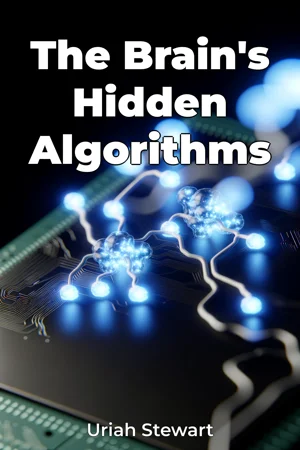
"What if your brain is running complex algorithms that even the most advanced AI can't replicate?" This provocative question opens "The Brain's Hidden Algorithms," a groundbreaking exploration of the intricate relationship between neuroscience and artificial intelligence. As we stand on the precipice of a new era in cognitive science, this book unveils the hidden mechanisms of our minds and their profound implications for the future of AI. The book delves into three key topics: the decoding of neural networks, the application of brain-inspired algorithms in AI, and the ethical implications of merging human and artificial intelligence. These subjects are crucial for understanding not only how our brains function but also how we can create more sophisticated and human-like AI systems. By bridging the gap between neuroscience and computer science, the book offers readers a unique perspective on the future of both fields. To fully appreciate the significance of these topics, the book provides essential context on the historical development of neuroscience and AI. It traces the evolution of our understanding of the brain, from early theories of neural function to modern imaging techniques that allow us to observe brain activity in real-time. Simultaneously, it outlines the progression of AI, from simple rule-based systems to complex neural networks inspired by the human brain. The central argument of "The Brain's Hidden Algorithms" is that by decoding the intricate algorithms underlying human cognition, we can revolutionize the field of artificial intelligence while gaining unprecedented insights into our own minds. This thesis challenges the traditional separation between neuroscience and AI, proposing a symbiotic relationship where advancements in one field directly inform and accelerate progress in the other. The book is structured to guide readers through this complex landscape. It begins by introducing fundamental concepts in neuroscience and AI, establishing a common language for understanding both fields. The narrative then develops through three major sections: first, exploring the latest research in mapping and decoding neural networks; second, examining how these insights are being applied to create more advanced AI systems; and finally, considering the broader implications of this convergence for society, ethics, and the future of human-machine interaction. To support its arguments, the book draws on a wealth of cutting-edge research, including neuroimaging studies, computational models of brain function, and state-of-the-art AI experiments. It features interviews with leading neuroscientists and AI researchers, providing firsthand accounts of breakthroughs and challenges in both fields. The author also presents case studies of successful brain-inspired AI applications, demonstrating the practical potential of this interdisciplinary approach. "The Brain's Hidden Algorithms" makes significant connections to fields beyond neuroscience and AI, including psychology, philosophy, and ethics. It explores how our growing understanding of the brain informs theories of consciousness and free will, and considers the ethical implications of creating AI systems that mimic human cognitive processes. What sets this book apart is its unique approach to synthesizing complex scientific concepts with philosophical questions about the nature of intelligence and consciousness. The author employs a blend of rigorous scientific explanation and accessible analogies, making the material engaging for both experts and general readers interested in the future of technology and human cognition. Written in a style that balances academic rigor with narrative flair, the book aims to captivate a broad audience, from neuroscientists and AI researchers to technology enthusiasts and curious general readers. It offers valuable insights for professionals in related fields while remaining accessible to anyone fascinated by the mysteries of the mind and the potential of AI. As a work of science non-fiction, the book adheres to high standards of accuracy and evidence-based reasoning. It carefully distinguishes between established facts, current hypotheses, and speculative ideas, providing readers with a clear understanding of the current state of knowledge in this rapidly evolving field. While comprehensive in its coverage of brain-inspired AI, the book acknowledges the limitations of our current understanding. It addresses ongoing debates in the field, such as the extent to which AI can truly replicate human intelligence, and the potential risks and benefits of developing highly advanced AI systems. Readers will find practical applications of the book's insights, from improving their own cognitive abilities based on neuroscientific findings to understanding the AI systems they interact with daily. The book also discusses potential future applications, such as brain-computer interfaces and AI-assisted medical diagnostics. "The Brain's Hidden Algorithms" doesn't shy away from controversies, addressing concerns about privacy, autonomy, and the potential existential risks of advanced AI. It presents balanced viewpoints on these issues, encouraging readers to think critically about the ethical implications of brain-inspired AI. By unraveling the complex algorithms of the human brain and exploring their applications in artificial intelligence, this book offers a fascinating glimpse into the future of cognitive science and technology. It challenges readers to reconsider their understanding of human intelligence and the potential of AI, paving the way for a new era of discovery and innovation at the intersection of mind and machine.
"What if your brain is running complex algorithms that even the most advanced AI can't replicate?" This provocative question opens "The Brain's Hidden Algorithms," a groundbreaking exploration of the intricate relationship between neuroscience and artificial intelligence. As we stand on the precipice of a new era in cognitive science, this book unveils the hidden mechanisms of our minds and their profound implications for the future of AI. The book delves into three key topics: the decoding of neural networks, the application of brain-inspired algorithms in AI, and the ethical implications of merging human and artificial intelligence. These subjects are crucial for understanding not only how our brains function but also how we can create more sophisticated and human-like AI systems. By bridging the gap between neuroscience and computer science, the book offers readers a unique perspective on the future of both fields. To fully appreciate the significance of these topics, the book provides essential context on the historical development of neuroscience and AI. It traces the evolution of our understanding of the brain, from early theories of neural function to modern imaging techniques that allow us to observe brain activity in real-time. Simultaneously, it outlines the progression of AI, from simple rule-based systems to complex neural networks inspired by the human brain. The central argument of "The Brain's Hidden Algorithms" is that by decoding the intricate algorithms underlying human cognition, we can revolutionize the field of artificial intelligence while gaining unprecedented insights into our own minds. This thesis challenges the traditional separation between neuroscience and AI, proposing a symbiotic relationship where advancements in one field directly inform and accelerate progress in the other. The book is structured to guide readers through this complex landscape. It begins by introducing fundamental concepts in neuroscience and AI, establishing a common language for understanding both fields. The narrative then develops through three major sections: first, exploring the latest research in mapping and decoding neural networks; second, examining how these insights are being applied to create more advanced AI systems; and finally, considering the broader implications of this convergence for society, ethics, and the future of human-machine interaction. To support its arguments, the book draws on a wealth of cutting-edge research, including neuroimaging studies, computational models of brain function, and state-of-the-art AI experiments. It features interviews with leading neuroscientists and AI researchers, providing firsthand accounts of breakthroughs and challenges in both fields. The author also presents case studies of successful brain-inspired AI applications, demonstrating the practical potential of this interdisciplinary approach. "The Brain's Hidden Algorithms" makes significant connections to fields beyond neuroscience and AI, including psychology, philosophy, and ethics. It explores how our growing understanding of the brain informs theories of consciousness and free will, and considers the ethical implications of creating AI systems that mimic human cognitive processes. What sets this book apart is its unique approach to synthesizing complex scientific concepts with philosophical questions about the nature of intelligence and consciousness. The author employs a blend of rigorous scientific explanation and accessible analogies, making the material engaging for both experts and general readers interested in the future of technology and human cognition. Written in a style that balances academic rigor with narrative flair, the book aims to captivate a broad audience, from neuroscientists and AI researchers to technology enthusiasts and curious general readers. It offers valuable insights for professionals in related fields while remaining accessible to anyone fascinated by the mysteries of the mind and the potential of AI. As a work of science non-fiction, the book adheres to high standards of accuracy and evidence-based reasoning. It carefully distinguishes between established facts, current hypotheses, and speculative ideas, providing readers with a clear understanding of the current state of knowledge in this rapidly evolving field. While comprehensive in its coverage of brain-inspired AI, the book acknowledges the limitations of our current understanding. It addresses ongoing debates in the field, such as the extent to which AI can truly replicate human intelligence, and the potential risks and benefits of developing highly advanced AI systems. Readers will find practical applications of the book's insights, from improving their own cognitive abilities based on neuroscientific findings to understanding the AI systems they interact with daily. The book also discusses potential future applications, such as brain-computer interfaces and AI-assisted medical diagnostics. "The Brain's Hidden Algorithms" doesn't shy away from controversies, addressing concerns about privacy, autonomy, and the potential existential risks of advanced AI. It presents balanced viewpoints on these issues, encouraging readers to think critically about the ethical implications of brain-inspired AI. By unraveling the complex algorithms of the human brain and exploring their applications in artificial intelligence, this book offers a fascinating glimpse into the future of cognitive science and technology. It challenges readers to reconsider their understanding of human intelligence and the potential of AI, paving the way for a new era of discovery and innovation at the intersection of mind and machine.
"The Brain's Hidden Algorithms" explores the fascinating intersection of neuroscience and artificial intelligence, unveiling the complex mechanisms of our minds and their implications for AI development. This groundbreaking book delves into three key areas: decoding neural networks, applying brain-inspired algorithms to AI, and examining the ethical consequences of merging human and artificial intelligence. The book's central argument proposes that by unraveling the intricate algorithms underlying human cognition, we can revolutionize AI while gaining unprecedented insights into our own minds. It guides readers through the latest research in mapping neural networks and demonstrates how these discoveries are being applied to create more advanced AI systems. Drawing on cutting-edge studies and interviews with leading experts, the author presents a compelling case for the symbiotic relationship between neuroscience and AI. What sets this book apart is its unique approach to synthesizing complex scientific concepts with philosophical questions about intelligence and consciousness. By balancing academic rigor with accessible language and engaging analogies, it offers valuable insights for both experts and general readers interested in the future of technology and human cognition. The book challenges readers to reconsider their understanding of human intelligence and the potential of AI, paving the way for a new era of discovery at the intersection of mind and machine.
Book Details
ISBN
9788233932619
Publisher
Publifye AS
Your Licenses
You don't own any licenses for this book
Purchase a license below to unlock this book and download the EPUB.
Purchase License
Select a tier to unlock this book
Need bulk licensing?
Contact us for enterprise agreements.