
About This Book
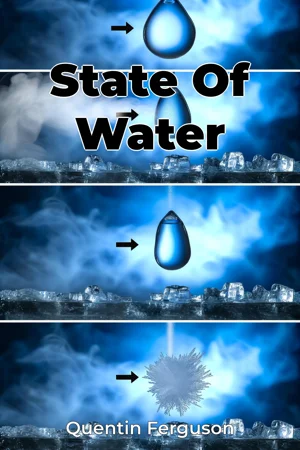
"State of Water: The Three Faces of Earth's Most Vital Resource" invites readers on a captivating journey through the molecular world of H2O. Have you ever wondered why ice floats, how clouds form, or why water is essential for life? This book unravels these mysteries and more, exploring the extraordinary properties of water in its three states of matter: liquid, vapor, and solid. The text delves into three main topics: the unique molecular structure of water, the transformative processes between its states, and the far-reaching impacts of water's behavior on our planet and daily lives. Understanding these concepts is crucial not only for appreciating the world around us but also for addressing pressing issues like climate change, water scarcity, and environmental conservation. To fully grasp the significance of water's states, readers are provided with essential background in molecular physics and chemistry. The book traces the history of water research, from ancient philosophers' musings to modern scientific breakthroughs, setting the stage for a deep dive into contemporary understanding. The central thesis argues that water's ability to exist in three distinct states at Earth's surface temperatures is what makes our planet habitable and drives the complex systems that support life. This fundamental property underlies everything from weather patterns to the water cycle, ocean currents, and even the formation of landscapes. The book is structured to guide readers through increasingly complex ideas. It begins by introducing the basic concepts of molecular bonding and polarity that give water its unique properties. The narrative then explores each state of water in depth, examining how molecules behave differently as liquids, gases, and solids. Finally, it culminates in an analysis of how these states interact in nature, driving global systems and local phenomena. To support its arguments, "State of Water" draws on a wide range of scientific research, including data from laboratory experiments, field studies, and advanced computer models. It also incorporates cutting-edge findings from disciplines such as quantum physics and climate science, offering readers insights into the latest developments in water research. The interdisciplinary nature of the topic is a key strength of the book. It connects physics and chemistry with earth sciences, biology, and environmental studies, demonstrating how water's properties influence everything from cellular processes to global climate patterns. These connections highlight the far-reaching implications of understanding water's behavior across multiple scientific domains. What sets this book apart is its innovative approach to explaining complex scientific concepts. It uses relatable analogies, vivid descriptions, and thought experiments to make abstract ideas accessible to a general audience. For instance, it compares the movement of water molecules to a chaotic dance party to illustrate the concept of kinetic energy in different states of matter. Written in a style that balances academic rigor with engaging narrative non-fiction, "State of Water" maintains a tone of wonder and discovery throughout. It aims to ignite curiosity and foster a deeper appreciation for the seemingly ordinary substance that shapes our world in extraordinary ways. The book is primarily targeted at science enthusiasts, students, and educated laypeople with an interest in physics, chemistry, or environmental science. However, its clear explanations and real-world applications make it valuable for anyone seeking to understand the fundamental processes that govern our planet. As a work of popular science, the book adheres to the conventions of the genre by presenting peer-reviewed research in an accessible format. It includes diagrams, illustrations, and sidebars to clarify complex concepts, as well as suggestions for further reading for those wishing to delve deeper into specific topics. While the book provides a comprehensive overview of water's states and their impacts, it acknowledges the limitations of current scientific understanding. It touches on ongoing debates in the field, such as the exact nature of water's quantum effects and the full extent of water's role in climate systems. Readers will find numerous practical applications for the knowledge gained from this book. From understanding why certain cooking methods work best for different foods to making informed decisions about water conservation, the insights provided have relevance to everyday life as well as broader environmental issues. "State of Water" also addresses current controversies, such as the debate over the best methods for water purification and the potential impacts of climate change on the global water cycle. By presenting the scientific principles underlying these issues, the book equips readers to engage more critically with these important topics. In sum, "State of Water" offers a comprehensive, engaging exploration of one of the most fundamental substances on Earth. By illuminating the fascinating properties of water in its three states, it provides readers with a new lens through which to view the world, fostering a deeper understanding of the intricate processes that sustain life on our blue planet.
"State of Water: The Three Faces of Earth's Most Vital Resource" invites readers on a captivating journey through the molecular world of H2O. Have you ever wondered why ice floats, how clouds form, or why water is essential for life? This book unravels these mysteries and more, exploring the extraordinary properties of water in its three states of matter: liquid, vapor, and solid. The text delves into three main topics: the unique molecular structure of water, the transformative processes between its states, and the far-reaching impacts of water's behavior on our planet and daily lives. Understanding these concepts is crucial not only for appreciating the world around us but also for addressing pressing issues like climate change, water scarcity, and environmental conservation. To fully grasp the significance of water's states, readers are provided with essential background in molecular physics and chemistry. The book traces the history of water research, from ancient philosophers' musings to modern scientific breakthroughs, setting the stage for a deep dive into contemporary understanding. The central thesis argues that water's ability to exist in three distinct states at Earth's surface temperatures is what makes our planet habitable and drives the complex systems that support life. This fundamental property underlies everything from weather patterns to the water cycle, ocean currents, and even the formation of landscapes. The book is structured to guide readers through increasingly complex ideas. It begins by introducing the basic concepts of molecular bonding and polarity that give water its unique properties. The narrative then explores each state of water in depth, examining how molecules behave differently as liquids, gases, and solids. Finally, it culminates in an analysis of how these states interact in nature, driving global systems and local phenomena. To support its arguments, "State of Water" draws on a wide range of scientific research, including data from laboratory experiments, field studies, and advanced computer models. It also incorporates cutting-edge findings from disciplines such as quantum physics and climate science, offering readers insights into the latest developments in water research. The interdisciplinary nature of the topic is a key strength of the book. It connects physics and chemistry with earth sciences, biology, and environmental studies, demonstrating how water's properties influence everything from cellular processes to global climate patterns. These connections highlight the far-reaching implications of understanding water's behavior across multiple scientific domains. What sets this book apart is its innovative approach to explaining complex scientific concepts. It uses relatable analogies, vivid descriptions, and thought experiments to make abstract ideas accessible to a general audience. For instance, it compares the movement of water molecules to a chaotic dance party to illustrate the concept of kinetic energy in different states of matter. Written in a style that balances academic rigor with engaging narrative non-fiction, "State of Water" maintains a tone of wonder and discovery throughout. It aims to ignite curiosity and foster a deeper appreciation for the seemingly ordinary substance that shapes our world in extraordinary ways. The book is primarily targeted at science enthusiasts, students, and educated laypeople with an interest in physics, chemistry, or environmental science. However, its clear explanations and real-world applications make it valuable for anyone seeking to understand the fundamental processes that govern our planet. As a work of popular science, the book adheres to the conventions of the genre by presenting peer-reviewed research in an accessible format. It includes diagrams, illustrations, and sidebars to clarify complex concepts, as well as suggestions for further reading for those wishing to delve deeper into specific topics. While the book provides a comprehensive overview of water's states and their impacts, it acknowledges the limitations of current scientific understanding. It touches on ongoing debates in the field, such as the exact nature of water's quantum effects and the full extent of water's role in climate systems. Readers will find numerous practical applications for the knowledge gained from this book. From understanding why certain cooking methods work best for different foods to making informed decisions about water conservation, the insights provided have relevance to everyday life as well as broader environmental issues. "State of Water" also addresses current controversies, such as the debate over the best methods for water purification and the potential impacts of climate change on the global water cycle. By presenting the scientific principles underlying these issues, the book equips readers to engage more critically with these important topics. In sum, "State of Water" offers a comprehensive, engaging exploration of one of the most fundamental substances on Earth. By illuminating the fascinating properties of water in its three states, it provides readers with a new lens through which to view the world, fostering a deeper understanding of the intricate processes that sustain life on our blue planet.
<p>"State of Water" explores the unique properties of H2O in its three states: liquid, vapor, and solid. The book examines water's molecular structure, the processes that transform it between states, and how these behaviors impact our planet and daily lives.</p> <p>The text covers the history of water research and provides background on molecular physics and chemistry. It argues that water's ability to exist in three states at Earth's temperatures is crucial for life and drives complex global systems.</p> <p>The book progresses from basic concepts of molecular bonding to in-depth analyses of each water state, culminating in an examination of how these states interact in nature. It draws on scientific research across multiple disciplines, using relatable analogies to explain complex ideas.</p> <p>Aimed at science enthusiasts and educated laypeople, the book connects physics and chemistry with earth sciences and environmental studies. It addresses current issues like climate change and water conservation, providing readers with practical knowledge and a deeper appreciation for water's role in shaping our world.</p>
Book Details
ISBN
9788233932527
Publisher
Publifye AS
Your Licenses
You don't own any licenses for this book
Purchase a license below to unlock this book and download the EPUB.
Purchase License
Select a tier to unlock this book
Need bulk licensing?
Contact us for enterprise agreements.