
About This Book
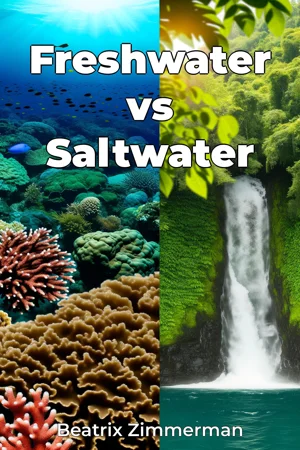
"Freshwater vs Saltwater: Unveiling Earth's Liquid Lifelines" opens with a thought-provoking question: "Did you know that less than 3% of Earth's water is freshwater, yet it sustains over 100,000 species of plants and animals?" This startling fact sets the stage for an in-depth exploration of the world's water systems, their differences, and their critical importance to life on our planet. The book delves into three main topics: the chemical and physical properties of freshwater and saltwater, the diverse ecosystems they support, and the human impact on these vital resources. By understanding these aspects, readers will gain a comprehensive view of how water shapes our world and why its conservation is crucial for our survival. To provide context, the book takes readers on a journey through Earth's hydrological cycle, explaining how water moves between oceans, atmosphere, and land. This background information sets the foundation for understanding the formation and distribution of freshwater and saltwater bodies across the globe. The central argument of "Freshwater vs Saltwater" is that while these two types of water may seem fundamentally different, they are interconnected parts of a single, global water system. Understanding this interconnectedness is key to addressing water-related challenges, from ecosystem preservation to climate change mitigation. The book is structured to guide readers through this complex topic systematically. It begins by introducing the basic concepts of water chemistry and physics, then explores the unique characteristics of freshwater and saltwater environments. The narrative then shifts to the incredible biodiversity found in these ecosystems, from the depths of the ocean to high mountain lakes. Finally, it examines human interactions with water resources, including their use, abuse, and conservation. To support its arguments, the book draws on a wide range of scientific research, including hydrological studies, marine biology, limnology, and environmental science. It also incorporates case studies from around the world, providing real-world examples of the principles discussed. "Freshwater vs Saltwater" makes interdisciplinary connections to fields such as chemistry, biology, and environmental science. It also explores links to geology, discussing how water shapes landscapes, and to climate science, examining the role of oceans in global weather patterns. What sets this book apart is its unique approach to presenting complex scientific concepts in an accessible, engaging manner. It uses analogies, infographics, and real-world examples to help readers visualize and understand the sometimes abstract principles of hydrology and aquatic ecology. The writing style is conversational yet informative, striking a balance between scientific accuracy and readability. This approach makes the book suitable for a wide audience, from high school students to adult learners with an interest in nature and science. "Freshwater vs Saltwater" is particularly valuable for environmental enthusiasts, students of earth sciences, and anyone concerned about water conservation. It provides a solid foundation for understanding global water issues, making it an essential read for those interested in environmental sustainability. As a work of popular science, the book includes elements typical of the genre, such as sidebars with interesting facts, profiles of key scientists in the field, and "myth-busting" sections that address common misconceptions about water. While the book covers a broad range of topics related to freshwater and saltwater, it acknowledges that entire books could be written about each subtopic. It focuses on providing a comprehensive overview rather than an exhaustive study of any single aspect. Readers can apply the knowledge gained from this book in various ways, from making informed decisions about water usage in their daily lives to understanding the broader implications of water-related policies and conservation efforts. The book also addresses ongoing debates in the field, such as the impact of climate change on ocean currents and freshwater availability, and the potential consequences of ocean acidification. In conclusion, "Freshwater vs Saltwater: Unveiling Earth's Liquid Lifelines" offers readers a captivating journey through the world of water, illuminating the critical role these resources play in shaping our planet and sustaining life. By fostering a deeper understanding of these interconnected systems, the book aims to inspire greater appreciation and stewardship of Earth's precious water resources.
"Freshwater vs Saltwater: Unveiling Earth's Liquid Lifelines" opens with a thought-provoking question: "Did you know that less than 3% of Earth's water is freshwater, yet it sustains over 100,000 species of plants and animals?" This startling fact sets the stage for an in-depth exploration of the world's water systems, their differences, and their critical importance to life on our planet. The book delves into three main topics: the chemical and physical properties of freshwater and saltwater, the diverse ecosystems they support, and the human impact on these vital resources. By understanding these aspects, readers will gain a comprehensive view of how water shapes our world and why its conservation is crucial for our survival. To provide context, the book takes readers on a journey through Earth's hydrological cycle, explaining how water moves between oceans, atmosphere, and land. This background information sets the foundation for understanding the formation and distribution of freshwater and saltwater bodies across the globe. The central argument of "Freshwater vs Saltwater" is that while these two types of water may seem fundamentally different, they are interconnected parts of a single, global water system. Understanding this interconnectedness is key to addressing water-related challenges, from ecosystem preservation to climate change mitigation. The book is structured to guide readers through this complex topic systematically. It begins by introducing the basic concepts of water chemistry and physics, then explores the unique characteristics of freshwater and saltwater environments. The narrative then shifts to the incredible biodiversity found in these ecosystems, from the depths of the ocean to high mountain lakes. Finally, it examines human interactions with water resources, including their use, abuse, and conservation. To support its arguments, the book draws on a wide range of scientific research, including hydrological studies, marine biology, limnology, and environmental science. It also incorporates case studies from around the world, providing real-world examples of the principles discussed. "Freshwater vs Saltwater" makes interdisciplinary connections to fields such as chemistry, biology, and environmental science. It also explores links to geology, discussing how water shapes landscapes, and to climate science, examining the role of oceans in global weather patterns. What sets this book apart is its unique approach to presenting complex scientific concepts in an accessible, engaging manner. It uses analogies, infographics, and real-world examples to help readers visualize and understand the sometimes abstract principles of hydrology and aquatic ecology. The writing style is conversational yet informative, striking a balance between scientific accuracy and readability. This approach makes the book suitable for a wide audience, from high school students to adult learners with an interest in nature and science. "Freshwater vs Saltwater" is particularly valuable for environmental enthusiasts, students of earth sciences, and anyone concerned about water conservation. It provides a solid foundation for understanding global water issues, making it an essential read for those interested in environmental sustainability. As a work of popular science, the book includes elements typical of the genre, such as sidebars with interesting facts, profiles of key scientists in the field, and "myth-busting" sections that address common misconceptions about water. While the book covers a broad range of topics related to freshwater and saltwater, it acknowledges that entire books could be written about each subtopic. It focuses on providing a comprehensive overview rather than an exhaustive study of any single aspect. Readers can apply the knowledge gained from this book in various ways, from making informed decisions about water usage in their daily lives to understanding the broader implications of water-related policies and conservation efforts. The book also addresses ongoing debates in the field, such as the impact of climate change on ocean currents and freshwater availability, and the potential consequences of ocean acidification. In conclusion, "Freshwater vs Saltwater: Unveiling Earth's Liquid Lifelines" offers readers a captivating journey through the world of water, illuminating the critical role these resources play in shaping our planet and sustaining life. By fostering a deeper understanding of these interconnected systems, the book aims to inspire greater appreciation and stewardship of Earth's precious water resources.
"Freshwater vs Saltwater: Unveiling Earth's Liquid Lifelines" explores the fascinating world of Earth's water systems, revealing the critical importance of both freshwater and saltwater to life on our planet. The book presents a comprehensive overview of water's chemical and physical properties, the diverse ecosystems it supports, and human impacts on these vital resources. Readers will be surprised to learn that less than 3% of Earth's water is freshwater, yet it sustains over 100,000 species of plants and animals. Through a systematic approach, the book guides readers from basic water chemistry to complex ecosystem dynamics and global water challenges. It emphasizes the interconnectedness of freshwater and saltwater as part of a single, global water system, highlighting how understanding this relationship is crucial for addressing water-related issues like ecosystem preservation and climate change mitigation. The narrative seamlessly weaves together scientific research, case studies, and real-world examples, making complex concepts accessible to a general audience interested in science and nature. What sets this book apart is its engaging presentation of scientific information, using analogies, infographics, and a conversational yet informative tone. As it progresses, readers gain insights into the hydrological cycle, aquatic biodiversity, and human interactions with water resources. By fostering a deeper understanding of Earth's "liquid lifelines," the book aims to inspire greater appreciation and stewardship of our planet's precious water resources.
Book Details
ISBN
9788233932329
Publisher
Publifye AS
Your Licenses
You don't own any licenses for this book
Purchase a license below to unlock this book and download the EPUB.
Purchase License
Select a tier to unlock this book
Need bulk licensing?
Contact us for enterprise agreements.