
About This Book
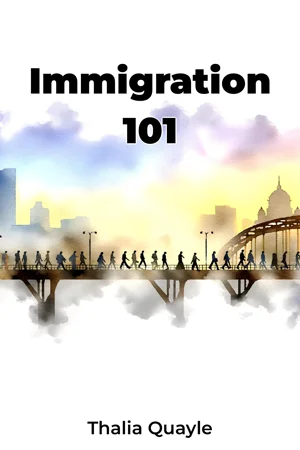
"What if everything you thought you knew about immigration was wrong?" This provocative question sets the stage for "Immigration 101," a comprehensive guide that demystifies one of the most contentious and misunderstood topics of our time. As global migration reshapes societies and economies worldwide, this book offers a clear-eyed, fact-based examination of immigration for the general reader. "Immigration 101" explores three key themes: the drivers of global migration, the economic impacts of immigration, and the social and cultural implications of demographic change. These topics are crucial for understanding the complex dynamics of modern societies and the interconnected nature of our world. By delving into these areas, readers will gain insights into the forces shaping communities, labor markets, and national identities across the globe. To provide essential context, the book begins with a historical overview of human migration, from prehistoric population movements to the mass migrations of the 19th and 20th centuries. This background helps readers understand that immigration is not a new phenomenon but a constant throughout human history. The book then examines the current state of global migration, presenting up-to-date statistics and trends that form the foundation for subsequent discussions. The central argument of "Immigration 101" is that immigration is a multifaceted phenomenon with both challenges and opportunities, and that evidence-based policies are essential for maximizing benefits while addressing legitimate concerns. This balanced approach is critical in an era of polarized debates and oversimplified narratives surrounding immigration. Structurally, the book is divided into four main sections. The first introduces key concepts and terminology in migration studies. The second examines the various factors driving immigration, including economic disparities, political instability, and climate change. The third section analyzes the economic impacts of immigration on both sending and receiving countries, challenging common misconceptions. The final section explores the social and cultural dimensions of immigration, including integration, multiculturalism, and national identity. To support its arguments, "Immigration 101" draws on a wide range of evidence, including academic research, government reports, and case studies from around the world. The book also features original data analysis and interviews with immigrants, policymakers, and experts in the field, providing a rich tapestry of perspectives and experiences. The interdisciplinary nature of immigration is reflected in the book's connections to economics, sociology, and political science. By integrating insights from these fields, "Immigration 101" offers a holistic understanding of migration that goes beyond simplistic narratives. What sets this book apart is its accessibility and commitment to nuance. Rather than advocating for a particular policy position, "Immigration 101" equips readers with the tools to critically evaluate immigration debates and form their own informed opinions. The writing style is conversational yet authoritative, striking a balance between academic rigor and general readability. While the book is designed for a general audience, it will be particularly valuable for students, journalists, policymakers, and anyone seeking a comprehensive introduction to immigration issues. By providing a solid factual foundation, "Immigration 101" enables readers to engage more effectively in discussions about one of the defining issues of our time. As a work of political and social science non-fiction, the book adheres to high standards of objectivity and evidence-based analysis. It acknowledges the complexity of immigration issues and avoids oversimplification or partisan rhetoric. While global in scope, "Immigration 101" focuses primarily on major immigration destination countries, with in-depth case studies from North America, Europe, and Oceania. The book acknowledges this limitation and provides resources for readers interested in exploring regional specifics further. Readers will find practical applications for the knowledge gained from this book, whether in their professional lives, civic engagement, or personal interactions in increasingly diverse communities. The book concludes with a discussion of policy options and potential future scenarios, encouraging readers to think critically about the role of immigration in shaping our collective future. "Immigration 101" does not shy away from addressing controversial topics, such as the economic impacts of low-skilled immigration or the challenges of cultural integration. By presenting multiple perspectives and the latest research on these issues, the book contributes to a more informed and nuanced public discourse on immigration. In an era of rapid global change and increasing human mobility, "Immigration 101" provides an essential roadmap for understanding one of the most significant phenomena shaping our world. It challenges readers to move beyond soundbites and stereotypes, offering a solid foundation for engaging with the complexities of immigration in the 21st century.
"What if everything you thought you knew about immigration was wrong?" This provocative question sets the stage for "Immigration 101," a comprehensive guide that demystifies one of the most contentious and misunderstood topics of our time. As global migration reshapes societies and economies worldwide, this book offers a clear-eyed, fact-based examination of immigration for the general reader. "Immigration 101" explores three key themes: the drivers of global migration, the economic impacts of immigration, and the social and cultural implications of demographic change. These topics are crucial for understanding the complex dynamics of modern societies and the interconnected nature of our world. By delving into these areas, readers will gain insights into the forces shaping communities, labor markets, and national identities across the globe. To provide essential context, the book begins with a historical overview of human migration, from prehistoric population movements to the mass migrations of the 19th and 20th centuries. This background helps readers understand that immigration is not a new phenomenon but a constant throughout human history. The book then examines the current state of global migration, presenting up-to-date statistics and trends that form the foundation for subsequent discussions. The central argument of "Immigration 101" is that immigration is a multifaceted phenomenon with both challenges and opportunities, and that evidence-based policies are essential for maximizing benefits while addressing legitimate concerns. This balanced approach is critical in an era of polarized debates and oversimplified narratives surrounding immigration. Structurally, the book is divided into four main sections. The first introduces key concepts and terminology in migration studies. The second examines the various factors driving immigration, including economic disparities, political instability, and climate change. The third section analyzes the economic impacts of immigration on both sending and receiving countries, challenging common misconceptions. The final section explores the social and cultural dimensions of immigration, including integration, multiculturalism, and national identity. To support its arguments, "Immigration 101" draws on a wide range of evidence, including academic research, government reports, and case studies from around the world. The book also features original data analysis and interviews with immigrants, policymakers, and experts in the field, providing a rich tapestry of perspectives and experiences. The interdisciplinary nature of immigration is reflected in the book's connections to economics, sociology, and political science. By integrating insights from these fields, "Immigration 101" offers a holistic understanding of migration that goes beyond simplistic narratives. What sets this book apart is its accessibility and commitment to nuance. Rather than advocating for a particular policy position, "Immigration 101" equips readers with the tools to critically evaluate immigration debates and form their own informed opinions. The writing style is conversational yet authoritative, striking a balance between academic rigor and general readability. While the book is designed for a general audience, it will be particularly valuable for students, journalists, policymakers, and anyone seeking a comprehensive introduction to immigration issues. By providing a solid factual foundation, "Immigration 101" enables readers to engage more effectively in discussions about one of the defining issues of our time. As a work of political and social science non-fiction, the book adheres to high standards of objectivity and evidence-based analysis. It acknowledges the complexity of immigration issues and avoids oversimplification or partisan rhetoric. While global in scope, "Immigration 101" focuses primarily on major immigration destination countries, with in-depth case studies from North America, Europe, and Oceania. The book acknowledges this limitation and provides resources for readers interested in exploring regional specifics further. Readers will find practical applications for the knowledge gained from this book, whether in their professional lives, civic engagement, or personal interactions in increasingly diverse communities. The book concludes with a discussion of policy options and potential future scenarios, encouraging readers to think critically about the role of immigration in shaping our collective future. "Immigration 101" does not shy away from addressing controversial topics, such as the economic impacts of low-skilled immigration or the challenges of cultural integration. By presenting multiple perspectives and the latest research on these issues, the book contributes to a more informed and nuanced public discourse on immigration. In an era of rapid global change and increasing human mobility, "Immigration 101" provides an essential roadmap for understanding one of the most significant phenomena shaping our world. It challenges readers to move beyond soundbites and stereotypes, offering a solid foundation for engaging with the complexities of immigration in the 21st century.
Book Details
ISBN
9788233932152
Publisher
Publifye AS
Your Licenses
You don't own any licenses for this book
Purchase a license below to unlock this book and download the EPUB.
Purchase License
Select a tier to unlock this book
Need bulk licensing?
Contact us for enterprise agreements.