
About This Book
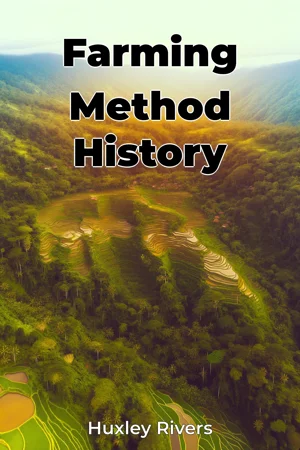
"Farming Method History: A Global Odyssey of Agricultural Innovation" opens with a provocative question: "How did a species of hunter-gatherers transform into masters of the earth's resources, capable of feeding billions?" This compelling inquiry sets the stage for a comprehensive exploration of farming methods throughout human history, spanning continents and millennia. The book delves into three key topics: the origins of agriculture, the evolution of farming technologies, and the global spread of agricultural practices. These themes are crucial for understanding not only how we feed ourselves today but also how human societies have developed and interacted with their environments over time. The significance of these topics extends beyond mere historical curiosity; they provide vital insights into current challenges in food security, environmental sustainability, and technological innovation. To contextualize these themes, the book provides a broad overview of human prehistory, explaining the transition from nomadic hunter-gatherer societies to settled agricultural communities. This background sets the stage for understanding the revolutionary nature of farming and its profound impact on human civilization. The central argument of "Farming Method History" is that the development and spread of agricultural techniques have been the primary drivers of human progress, shaping societies, economies, and even our planet's ecology. This thesis underscores the book's importance in fields ranging from anthropology and economics to environmental science and technology studies. Structurally, the book is divided into three main parts. The first introduces the concept of agriculture and its earliest manifestations in different parts of the world. The second part traces the development of farming technologies, from simple hand tools to complex irrigation systems and mechanized equipment. The final section examines how agricultural practices spread globally, influencing and being influenced by diverse cultures and environments. To support its arguments, the book draws on a wide range of evidence, including archaeological findings, historical records, and cutting-edge genetic research. It also incorporates data from modern agronomic studies and ethnographic observations of traditional farming communities, providing a multifaceted view of agricultural history. The interdisciplinary nature of "Farming Method History" is evident in its connections to climate science, exploring how changing environmental conditions influenced farming practices; to sociology, examining how agricultural societies developed complex social structures; and to economics, analyzing how farming surpluses led to trade and specialization. What sets this book apart is its global perspective, moving beyond the often Eurocentric narratives of agricultural history to provide a truly worldwide account. It gives equal weight to developments in the Americas, Africa, and Asia, offering readers a more comprehensive understanding of farming's diverse origins and evolutionary paths. Written in an accessible yet scholarly tone, the book balances academic rigor with engaging storytelling. It aims to appeal to a wide audience, from students and academics in related fields to policymakers and general readers interested in the origins of our food systems. As a work of world history with strong ties to technology and agricultural studies, "Farming Method History" adheres to conventions of meticulous research and fact-based narratives while maintaining a broad, interconnected view of global developments. While the book covers an extensive timeframe and geographical area, it acknowledges its limitations, focusing primarily on major agricultural innovations and their spread rather than providing an exhaustive account of every local farming practice. The practical applications of this historical knowledge are numerous. Readers will gain insights into sustainable farming practices, understand the long-term effects of agricultural policies, and appreciate the cultural significance of various farming traditions. This knowledge is particularly relevant in an era grappling with climate change, food security, and the need for sustainable agricultural practices. The book doesn't shy away from addressing controversies, such as debates over the environmental impact of early farming or the role of agriculture in social inequality. It presents various perspectives on these issues, encouraging readers to think critically about the complex legacy of agricultural development. In sum, "Farming Method History: A Global Odyssey of Agricultural Innovation" offers a sweeping yet detailed exploration of how humans have cultivated the earth throughout history. By tracing the development and spread of farming methods across the globe, it provides crucial insights into our past, present, and future relationship with food production and the natural world.
"Farming Method History: A Global Odyssey of Agricultural Innovation" opens with a provocative question: "How did a species of hunter-gatherers transform into masters of the earth's resources, capable of feeding billions?" This compelling inquiry sets the stage for a comprehensive exploration of farming methods throughout human history, spanning continents and millennia. The book delves into three key topics: the origins of agriculture, the evolution of farming technologies, and the global spread of agricultural practices. These themes are crucial for understanding not only how we feed ourselves today but also how human societies have developed and interacted with their environments over time. The significance of these topics extends beyond mere historical curiosity; they provide vital insights into current challenges in food security, environmental sustainability, and technological innovation. To contextualize these themes, the book provides a broad overview of human prehistory, explaining the transition from nomadic hunter-gatherer societies to settled agricultural communities. This background sets the stage for understanding the revolutionary nature of farming and its profound impact on human civilization. The central argument of "Farming Method History" is that the development and spread of agricultural techniques have been the primary drivers of human progress, shaping societies, economies, and even our planet's ecology. This thesis underscores the book's importance in fields ranging from anthropology and economics to environmental science and technology studies. Structurally, the book is divided into three main parts. The first introduces the concept of agriculture and its earliest manifestations in different parts of the world. The second part traces the development of farming technologies, from simple hand tools to complex irrigation systems and mechanized equipment. The final section examines how agricultural practices spread globally, influencing and being influenced by diverse cultures and environments. To support its arguments, the book draws on a wide range of evidence, including archaeological findings, historical records, and cutting-edge genetic research. It also incorporates data from modern agronomic studies and ethnographic observations of traditional farming communities, providing a multifaceted view of agricultural history. The interdisciplinary nature of "Farming Method History" is evident in its connections to climate science, exploring how changing environmental conditions influenced farming practices; to sociology, examining how agricultural societies developed complex social structures; and to economics, analyzing how farming surpluses led to trade and specialization. What sets this book apart is its global perspective, moving beyond the often Eurocentric narratives of agricultural history to provide a truly worldwide account. It gives equal weight to developments in the Americas, Africa, and Asia, offering readers a more comprehensive understanding of farming's diverse origins and evolutionary paths. Written in an accessible yet scholarly tone, the book balances academic rigor with engaging storytelling. It aims to appeal to a wide audience, from students and academics in related fields to policymakers and general readers interested in the origins of our food systems. As a work of world history with strong ties to technology and agricultural studies, "Farming Method History" adheres to conventions of meticulous research and fact-based narratives while maintaining a broad, interconnected view of global developments. While the book covers an extensive timeframe and geographical area, it acknowledges its limitations, focusing primarily on major agricultural innovations and their spread rather than providing an exhaustive account of every local farming practice. The practical applications of this historical knowledge are numerous. Readers will gain insights into sustainable farming practices, understand the long-term effects of agricultural policies, and appreciate the cultural significance of various farming traditions. This knowledge is particularly relevant in an era grappling with climate change, food security, and the need for sustainable agricultural practices. The book doesn't shy away from addressing controversies, such as debates over the environmental impact of early farming or the role of agriculture in social inequality. It presents various perspectives on these issues, encouraging readers to think critically about the complex legacy of agricultural development. In sum, "Farming Method History: A Global Odyssey of Agricultural Innovation" offers a sweeping yet detailed exploration of how humans have cultivated the earth throughout history. By tracing the development and spread of farming methods across the globe, it provides crucial insights into our past, present, and future relationship with food production and the natural world.
Book Details
ISBN
9788233932121
Publisher
Publifye AS
Your Licenses
You don't own any licenses for this book
Purchase a license below to unlock this book and download the EPUB.
Purchase License
Select a tier to unlock this book
Need bulk licensing?
Contact us for enterprise agreements.