
About This Book
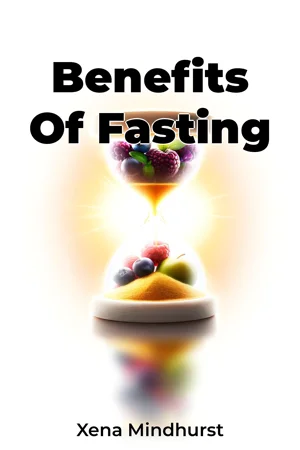
"What if the key to unlocking your body's full potential and sharpening your mind was not adding something to your routine, but taking something away?" This intriguing question opens "Benefits of Fasting," a comprehensive exploration of how regular fasting can transform both our physical health and cognitive abilities. The book delves into two primary topics: the physiological effects of fasting on the body and its impact on brain function. These subjects are crucial for readers seeking to optimize their health and cognitive performance in an age where lifestyle-related diseases and mental health issues are on the rise. To contextualize the discussion, the book provides a historical overview of fasting practices across cultures and religions, as well as recent scientific advancements in understanding the body's response to caloric restriction. This background sets the stage for readers to grasp the evolutionary basis of fasting and its potential benefits in modern life. The central thesis of "Benefits of Fasting" is that regular, controlled periods of food abstinence can trigger a cascade of positive changes in the body and brain, leading to improved overall health, enhanced cognitive function, and potentially increased longevity. This argument challenges the conventional wisdom of constant caloric intake and presents fasting as a powerful tool for personal transformation. The book is structured to guide readers through the science of fasting, its practical applications, and its potential long-term effects. It begins by introducing the concept of intermittent fasting and various fasting protocols. The subsequent chapters explore the physiological changes that occur during fasting, including autophagy, metabolic switching, and hormonal regulation. The final section focuses on the cognitive benefits of fasting, examining its effects on neuroplasticity, mood regulation, and potential neuroprotective properties. To support its arguments, the book draws on a wide range of scientific studies, including clinical trials, animal research, and epidemiological data. It also incorporates case studies and expert interviews to provide real-world context and practical insights. "Benefits of Fasting" makes interdisciplinary connections between nutrition science, neurobiology, and evolutionary biology. It also touches on the fields of chronobiology and epigenetics, demonstrating how fasting can influence our circadian rhythms and gene expression. The book's unique approach lies in its comprehensive integration of cutting-edge research with practical, actionable advice. It not only explains the "why" behind fasting but also provides detailed guidance on the "how," making it accessible to both science enthusiasts and those seeking practical health solutions. Written in a style that balances scientific rigor with reader-friendly explanations, "Benefits of Fasting" aims to inform and inspire. It maintains an authoritative tone while using analogies and real-life examples to illustrate complex concepts. The target audience includes health-conscious individuals, fitness enthusiasts, and those interested in cognitive enhancement and longevity. It's particularly appealing to readers who enjoy evidence-based approaches to personal development and are open to challenging conventional dietary wisdom. As a work in the self-help and health & fitness genres, the book includes practical tips, fasting protocols, and troubleshooting advice. It also addresses common myths and misconceptions about fasting, providing readers with a solid foundation for making informed decisions about their health. While the book covers a wide range of fasting-related topics, it acknowledges the limitations of current research and areas where more studies are needed. It also emphasizes the importance of individual variations and the need for personalized approaches to fasting. Readers can apply the information through step-by-step guides for implementing various fasting regimens, tips for optimizing fasting periods, and strategies for integrating fasting into different lifestyles. The book addresses ongoing debates in the field, such as the optimal fasting duration and frequency, and the potential risks for certain populations. It presents a balanced view of these controversies, encouraging readers to consider the evidence and consult with healthcare professionals when necessary. "Benefits of Fasting" offers a compelling, science-based exploration of how strategic food abstinence can unlock our body's innate healing mechanisms and boost our cognitive capabilities, providing readers with a powerful tool for enhancing their health and well-being.
"What if the key to unlocking your body's full potential and sharpening your mind was not adding something to your routine, but taking something away?" This intriguing question opens "Benefits of Fasting," a comprehensive exploration of how regular fasting can transform both our physical health and cognitive abilities. The book delves into two primary topics: the physiological effects of fasting on the body and its impact on brain function. These subjects are crucial for readers seeking to optimize their health and cognitive performance in an age where lifestyle-related diseases and mental health issues are on the rise. To contextualize the discussion, the book provides a historical overview of fasting practices across cultures and religions, as well as recent scientific advancements in understanding the body's response to caloric restriction. This background sets the stage for readers to grasp the evolutionary basis of fasting and its potential benefits in modern life. The central thesis of "Benefits of Fasting" is that regular, controlled periods of food abstinence can trigger a cascade of positive changes in the body and brain, leading to improved overall health, enhanced cognitive function, and potentially increased longevity. This argument challenges the conventional wisdom of constant caloric intake and presents fasting as a powerful tool for personal transformation. The book is structured to guide readers through the science of fasting, its practical applications, and its potential long-term effects. It begins by introducing the concept of intermittent fasting and various fasting protocols. The subsequent chapters explore the physiological changes that occur during fasting, including autophagy, metabolic switching, and hormonal regulation. The final section focuses on the cognitive benefits of fasting, examining its effects on neuroplasticity, mood regulation, and potential neuroprotective properties. To support its arguments, the book draws on a wide range of scientific studies, including clinical trials, animal research, and epidemiological data. It also incorporates case studies and expert interviews to provide real-world context and practical insights. "Benefits of Fasting" makes interdisciplinary connections between nutrition science, neurobiology, and evolutionary biology. It also touches on the fields of chronobiology and epigenetics, demonstrating how fasting can influence our circadian rhythms and gene expression. The book's unique approach lies in its comprehensive integration of cutting-edge research with practical, actionable advice. It not only explains the "why" behind fasting but also provides detailed guidance on the "how," making it accessible to both science enthusiasts and those seeking practical health solutions. Written in a style that balances scientific rigor with reader-friendly explanations, "Benefits of Fasting" aims to inform and inspire. It maintains an authoritative tone while using analogies and real-life examples to illustrate complex concepts. The target audience includes health-conscious individuals, fitness enthusiasts, and those interested in cognitive enhancement and longevity. It's particularly appealing to readers who enjoy evidence-based approaches to personal development and are open to challenging conventional dietary wisdom. As a work in the self-help and health & fitness genres, the book includes practical tips, fasting protocols, and troubleshooting advice. It also addresses common myths and misconceptions about fasting, providing readers with a solid foundation for making informed decisions about their health. While the book covers a wide range of fasting-related topics, it acknowledges the limitations of current research and areas where more studies are needed. It also emphasizes the importance of individual variations and the need for personalized approaches to fasting. Readers can apply the information through step-by-step guides for implementing various fasting regimens, tips for optimizing fasting periods, and strategies for integrating fasting into different lifestyles. The book addresses ongoing debates in the field, such as the optimal fasting duration and frequency, and the potential risks for certain populations. It presents a balanced view of these controversies, encouraging readers to consider the evidence and consult with healthcare professionals when necessary. "Benefits of Fasting" offers a compelling, science-based exploration of how strategic food abstinence can unlock our body's innate healing mechanisms and boost our cognitive capabilities, providing readers with a powerful tool for enhancing their health and well-being.
Book Details
ISBN
9788233932114
Publisher
Publifye AS
Your Licenses
You don't own any licenses for this book
Purchase a license below to unlock this book and download the EPUB.
Purchase License
Select a tier to unlock this book
Need bulk licensing?
Contact us for enterprise agreements.