
About This Book
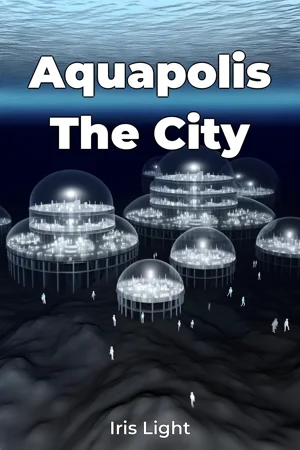
"Aquapolis: Humanity's Undersea Frontier" is a gripping science fiction novel set in the year 2150, chronicling humanity's audacious response to the global crisis of rising sea levels. As coastal cities worldwide face imminent submersion, the international community makes an unprecedented decision: instead of retreating inland, they venture beneath the waves of the Pacific Ocean to establish Aquapolis, a groundbreaking underwater metropolis. The story follows Dr. Amelia Chen, a brilliant marine architect, and Captain Marcus Reeves, a seasoned deep-sea explorer, as they spearhead the Aquapolis project. Their contrasting personalities—Amelia's visionary optimism and Marcus's pragmatic caution—create a dynamic tension that drives the narrative forward. Supporting characters include Dr. Rajesh Patel, a cutting-edge materials scientist, and Lieutenant Sarah Nakamura, a skilled submersible pilot, each bringing unique expertise to the underwater city's development. Set against the backdrop of a world grappling with climate change, Aquapolis represents humanity's last stand against nature's relentless advance. The novel vividly describes the technological marvels of the underwater city: massive transparent domes housing thriving communities, advanced hydroponic farms ensuring food security, and a complex network of tunnels connecting various sectors of the sprawling metropolis. The central conflict emerges as the team faces unforeseen challenges in constructing and maintaining Aquapolis. From structural integrity issues caused by immense oceanic pressures to the psychological toll of living beneath the waves, the characters must overcome both technical and human obstacles. The stakes are further raised when a series of mysterious equipment failures threaten the entire project, hinting at possible sabotage from those who oppose humanity's undersea expansion. As the plot unfolds, readers are taken on a journey through the various stages of Aquapolis's development. The narrative alternates between the tense board meetings where crucial decisions are made, the dangerous deep-sea expeditions to secure resources, and the personal struggles of the characters as they adapt to their new underwater lifestyle. The story culminates in a race against time to uncover the source of the sabotage and save Aquapolis from catastrophic failure. Key themes explored in the novel include human resilience in the face of environmental disaster, the ethical implications of pioneering new frontiers, and the delicate balance between technological progress and natural preservation. The book also delves into the psychological effects of living in an enclosed underwater environment and the formation of a new society with its own unique culture and norms. Written in a compelling, fast-paced style, the author seamlessly blends hard science fiction elements with suspenseful plot twists. The narrative is rich with detailed descriptions of futuristic technology and underwater ecosystems, creating a vivid and immersive world for readers to explore. The author's extensive research into marine biology, engineering, and climate science lends authenticity to the speculative elements of the story. "Aquapolis: Humanity's Undersea Frontier" is aimed at adult readers who enjoy thought-provoking science fiction with a strong basis in real-world issues. The novel's unique blend of underwater adventure, technological innovation, and ecological themes sets it apart in the genre. By presenting a bold vision of humanity's adaptation to climate change, the book offers both a warning about our current environmental trajectory and a hopeful glimpse into our species' potential for innovation and survival.
"Aquapolis: Humanity's Undersea Frontier" is a gripping science fiction novel set in the year 2150, chronicling humanity's audacious response to the global crisis of rising sea levels. As coastal cities worldwide face imminent submersion, the international community makes an unprecedented decision: instead of retreating inland, they venture beneath the waves of the Pacific Ocean to establish Aquapolis, a groundbreaking underwater metropolis. The story follows Dr. Amelia Chen, a brilliant marine architect, and Captain Marcus Reeves, a seasoned deep-sea explorer, as they spearhead the Aquapolis project. Their contrasting personalities—Amelia's visionary optimism and Marcus's pragmatic caution—create a dynamic tension that drives the narrative forward. Supporting characters include Dr. Rajesh Patel, a cutting-edge materials scientist, and Lieutenant Sarah Nakamura, a skilled submersible pilot, each bringing unique expertise to the underwater city's development. Set against the backdrop of a world grappling with climate change, Aquapolis represents humanity's last stand against nature's relentless advance. The novel vividly describes the technological marvels of the underwater city: massive transparent domes housing thriving communities, advanced hydroponic farms ensuring food security, and a complex network of tunnels connecting various sectors of the sprawling metropolis. The central conflict emerges as the team faces unforeseen challenges in constructing and maintaining Aquapolis. From structural integrity issues caused by immense oceanic pressures to the psychological toll of living beneath the waves, the characters must overcome both technical and human obstacles. The stakes are further raised when a series of mysterious equipment failures threaten the entire project, hinting at possible sabotage from those who oppose humanity's undersea expansion. As the plot unfolds, readers are taken on a journey through the various stages of Aquapolis's development. The narrative alternates between the tense board meetings where crucial decisions are made, the dangerous deep-sea expeditions to secure resources, and the personal struggles of the characters as they adapt to their new underwater lifestyle. The story culminates in a race against time to uncover the source of the sabotage and save Aquapolis from catastrophic failure. Key themes explored in the novel include human resilience in the face of environmental disaster, the ethical implications of pioneering new frontiers, and the delicate balance between technological progress and natural preservation. The book also delves into the psychological effects of living in an enclosed underwater environment and the formation of a new society with its own unique culture and norms. Written in a compelling, fast-paced style, the author seamlessly blends hard science fiction elements with suspenseful plot twists. The narrative is rich with detailed descriptions of futuristic technology and underwater ecosystems, creating a vivid and immersive world for readers to explore. The author's extensive research into marine biology, engineering, and climate science lends authenticity to the speculative elements of the story. "Aquapolis: Humanity's Undersea Frontier" is aimed at adult readers who enjoy thought-provoking science fiction with a strong basis in real-world issues. The novel's unique blend of underwater adventure, technological innovation, and ecological themes sets it apart in the genre. By presenting a bold vision of humanity's adaptation to climate change, the book offers both a warning about our current environmental trajectory and a hopeful glimpse into our species' potential for innovation and survival.
Book Details
ISBN
9788233929121
Publisher
Publifye AS
Your Licenses
You don't own any licenses for this book
Purchase a license below to unlock this book and download the EPUB.
Purchase License
Select a tier to unlock this book
Need bulk licensing?
Contact us for enterprise agreements.